Beware of Resume Scams: A Cautionary Tale
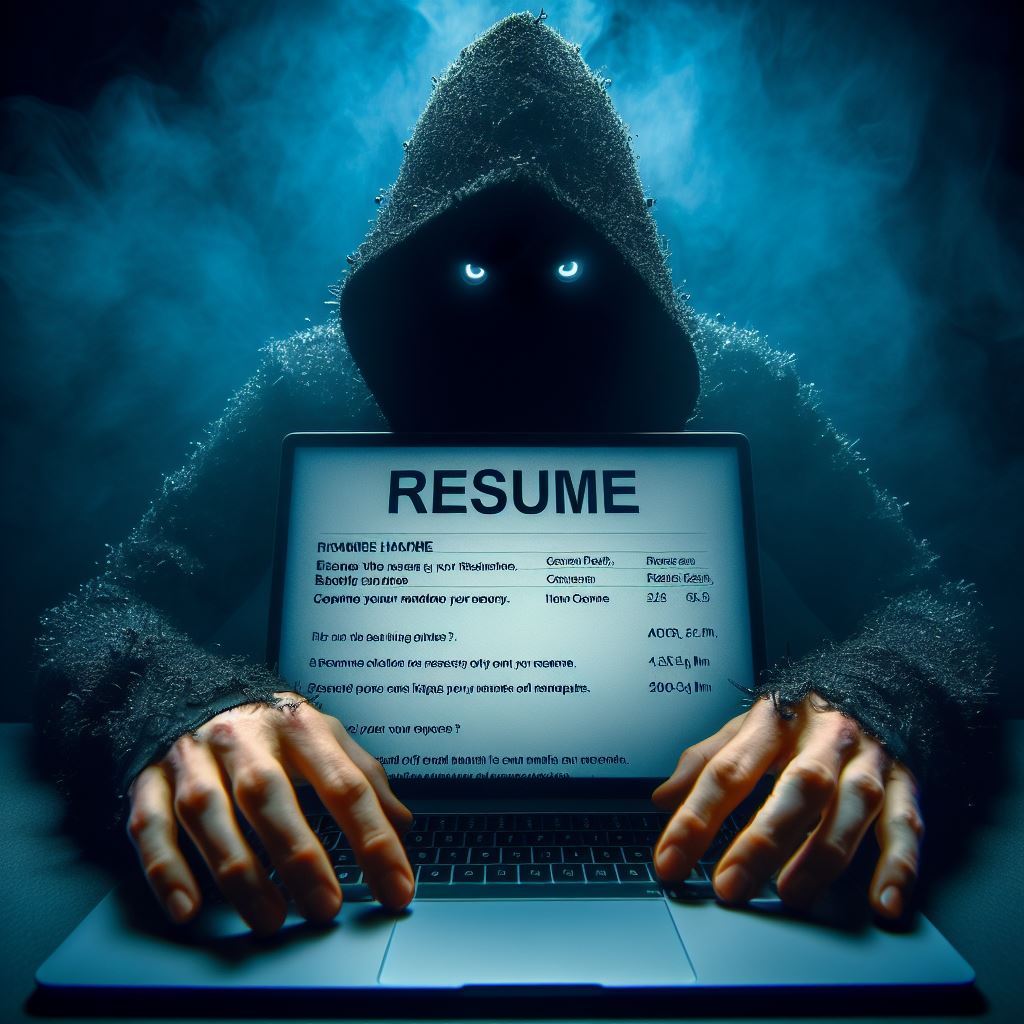
Alice was looking for a new job as a web developer. She had a resume that listed her skills, education, work experience, and personal information. She uploaded her resume to several online job portals, hoping to get some interviews.
One day, she received an email from Bob, who claimed to be a recruiter from a reputable company. He said he was impressed by her resume and wanted to schedule a phone interview with her. He asked her to confirm her availability and phone number.
Alice was excited and replied to the email without thinking twice. She gave him her phone number and told him when she was free. She also attached her resume again, just in case.
The next day, she received a call from Bob. He sounded friendly and professional. He asked her some questions about her resume, such as her previous projects, her skills, and her goals. He also asked her some personal questions, such as her date of birth, her address, and her social security number. He said he needed these information for a background check, as the job required a high level of security clearance.
Alice thought these were normal questions for a recruiter to ask, so she answered them without hesitation. She did not realize that Bob was not a real recruiter, but a hacker who was phishing for her personal information. He used her resume to craft a convincing email and a fake identity. He also used her phone number to spoof his caller ID and make it look like he was calling from the company.
Bob used Alice's personal information to steal her identity. He opened credit cards in her name, applied for loans, and made fraudulent purchases. He also hacked into her email and social media accounts, and sent malicious links to her contacts. He ruined her reputation and credit score.
Alice only realized she was scammed when she received a bill for a credit card she never applied for. She tried to contact Bob, but his email and phone number were no longer valid. She reported the incident to the authorities, but it was too late. She had to spend a lot of time and money to clear her name and fix the damage.
Alice learned a hard lesson that day. She realized that she should not have included her personal information in her resume, and that she should have verified the identity of the recruiter before giving out any sensitive information. She also learned that she should have used a secure password manager and a VPN to protect her online accounts. She vowed to be more careful and vigilant in the future.
How to Avoid Resume Scams
Resume scams are a type of phishing scam that target job seekers. Scammers pretend to be recruiters or employers and use fake job offers or interviews to lure victims into giving out their personal information or money. They may also use the information to commit identity theft or fraud.
Here are some tips on how to avoid resume scams:
- Do your research. Before you apply for a job or respond to an email, do some background check on the company and the recruiter. Look for their website, social media profiles, reviews, and contact information. If the company or the recruiter does not have a legitimate online presence, or if the email address does not match the company domain, be wary.
- Be careful with your personal information. Do not include your Social Security number, date of birth, address, or other sensitive information in your resume. Only provide these information when you are sure that the job offer or the interview is legitimate and necessary. Also, do not send money, gift cards, or bank account details to anyone who claims to be a recruiter or an employer.
- Verify the caller ID. If you receive a phone call from a recruiter or an employer, do not trust the caller ID, as scammers can spoof it to make it look like they are calling from a legitimate number. Ask for the name and the position of the caller, and call back the company using a verified number to confirm their identity.
- Report the scam. If you suspect that you have been a victim of a resume scam, report it to the Federal Trade Commission (FTC) at [ftc.gov/complaint](https://www.w3schools.com/cssref/css_pr_border-inline.php) or call 1-877-FTC-HELP. You can also report it to the local police, the state attorney general, and the online job portal where you found the job posting. Also, check your credit reports and your bank statements for any signs of unauthorized activity, and alert your credit card companies and your bank if you notice any fraud.
- Limit your exposure. Don't share too much personal information on social media, such as your full name, date of birth, address, phone number, or photos of your ID cards. Scammers can use this information to impersonate you or to answer security questions to access your accounts. Also, don't participate in online quizzes or surveys that ask you for personal information, as they may be phishing schemes. Adjust your privacy settings on your social media accounts to limit who can see your posts and personal information.
Resume scams are a serious threat to job seekers, but you can protect yourself by being cautious and vigilant. Remember, if something sounds too good to be true, it probably is. Stay safe and happy job hunting! 😊